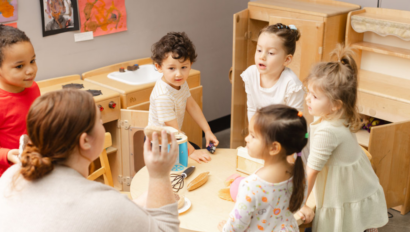
How STEAM and Reggio-Inspired Learning Come Together at Kozy Kids
QUICK ANSWER
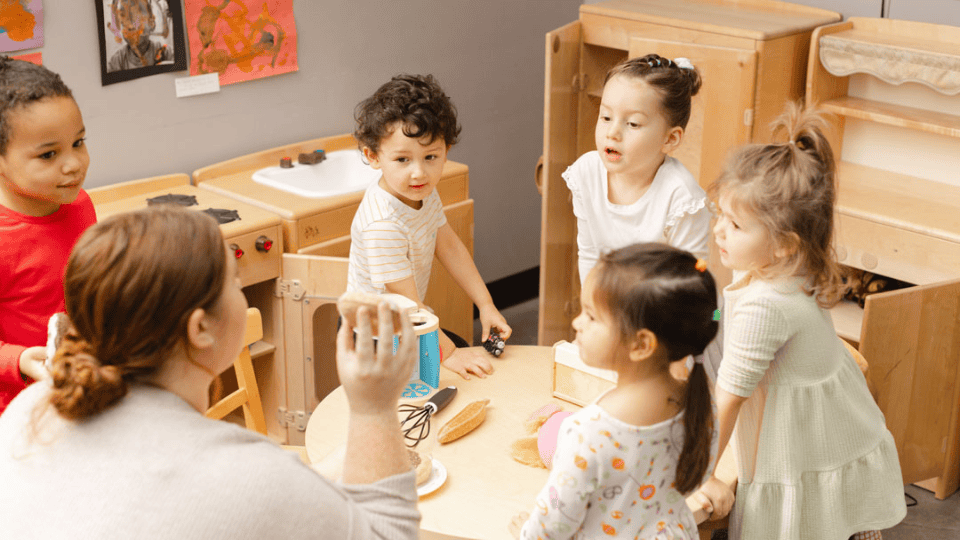
At Kozy Kids Enrichment Center, STEAM and Reggio-inspired learning both begin with curiosity. Children explore questions through hands-on materials, creative expression, conversation, and collaboration. Instead of treating science, technology, engineering, art, and math as separate subjects, this approach lets children investigate ideas in ways that feel connected to their everyday world.
STEAM Begins With a Question
For a young child, STEAM learning often starts simply. What happens when light shines through something? How can we make this tower stand taller? Why does water move differently through sand, a tube, or a cup
In early childhood, science, technology, engineering, art, and math often meet naturally. A child measuring blocks while building, drawing a plan for a pretend neighborhood, or noticing how shadows change is using more than one kind of thinking at a time.
The learning does not need to look like a formal lesson. It can grow from a child’s genuine interest and become richer as adults listen, observe, and offer materials or questions that help the child keep exploring.
Reggio-Inspired Learning Gives Children an Active Role
Kozy Kids uses STEAM curriculum within Reggio-inspired classrooms. In this approach, children are seen as capable participants in learning. Their ideas, questions, relationships, and ways of expressing themselves all matter.
A child’s question can become the beginning of a project. An educator may help the child revisit an idea through drawing, conversation, materials, or another experiment. The child is still doing the important work of wondering and making meaning.
The Environment Gives Ideas a Place to Grow
A classroom can invite curiosity before anyone begins to explain a concept. Open-ended materials, natural elements, tools for art, and places to build or collaborate can help children return to an idea in more than one way.
Kozy Kids describes its learning environments as sensory-rich. Young children often learn with their whole bodies — using touch, movement, sound, visual detail, and conversation to explore the same question.
The curriculum includes investigations such as studying insects found on the playground, creating a neighborhood map, experimenting with light and shadow, and exploring how water moves. These everyday investigations bring STEAM thinking into a child’s own world.
Art, Language, and Relationships Belong in STEAM Learning
In a Reggio-inspired classroom, art is one of the ways a child develops and shares an idea. Children may draw a plan, build a model, tell a story, or use color and texture to show what they noticed.
Language and relationships also matter. When children explain an idea to a friend, listen to another child’s observation, or try again after something does not work, they are practicing communication and collaboration alongside problem-solving. This makes STEAM learning feel human and connected.
What Families May Notice Over Time
Families may see learning documented through children’s creations, photos, conversations, or projects that develop over time. A child may return to an investigation more than once, adding a new idea or trying a different material.
At home, families can keep the same spirit alive with everyday questions: What did you notice? What do you think might happen next? How could we try that another way? These questions invite children to share their thinking without needing to produce a right answer.
Frequently Asked Questions
Is STEAM a separate class at Kozy Kids?
STEAM is part of Kozy Kids’ curriculum and is woven into its Reggio-inspired approach. It supports hands-on inquiry, creativity, and collaborative learning throughout the day.
What ages can take part in STEAM learning at Kozy Kids?
Kozy Kids serves children from infancy through pre-K. STEAM experiences are adapted to each developmental stage through materials, exploration, and relationships.
Does art count as STEAM learning?
Yes. Art can help children represent ideas, test materials, communicate what they notice, and return to a question in a new way.
How can families support STEAM learning at home?
Offer simple materials, notice everyday questions, and invite children to describe what they are observing, building, or trying. The curiosity is already there — it just needs room.
Young children do not need complicated materials to think deeply. They need time, relationships, and invitations to explore. Schedule a tour of Kozy Kids in Bethany to see how STEAM and Reggio-inspired learning come together in the classroom.
Related Posts
All Posts
A Toddler Day at Kozy Kids in Bethany: Routines, Sensory Exploration, and Organic Snacks

How Reggio-Inspired Preschools Build Curriculum Around Your Child in Portland, OR