Teaching Gratitude to Young Children: Everyday Ideas for Portland Families
Quick Answer
Gratitude, kindness, and generosity help children build empathy, confidence, and strong relationships. In a play-based learning environment, children practice these values through daily routines, joyful moments, and opportunities to care for others. Parents can nurture gratitude at home by modeling thankfulness, creating simple rituals, and celebrating small acts of kindness.
Why Is It Important to Teach Gratitude and Generosity Early?
Early childhood is a natural time to introduce gratitude. Children are curious, eager to connect, and ready to copy what they see in the adults around them.
Research from the Child Mind Institute shows that children who practice gratitude are more resilient, confident, and socially aware. Thankfulness helps them build strong friendships and find joy in everyday experiences — from sharing a toy to noticing someone else’s feelings.
What Are Practical Ways Families Can Teach Gratitude at Home?
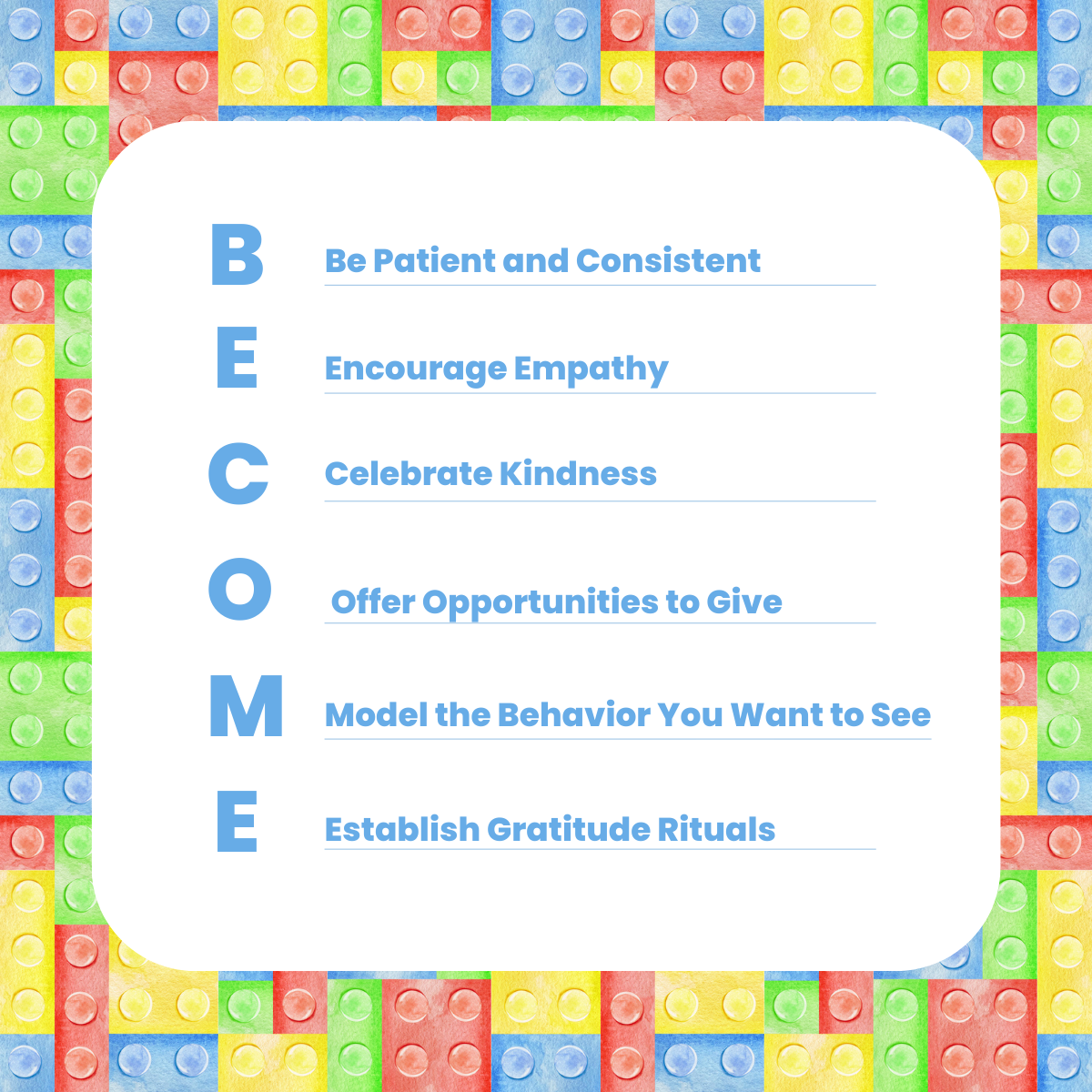
Gratitude doesn’t have to be complicated. One helpful way to think about it is the B.E.C.O.M.E. framework:
- B – Be Patient and Consistent
Gentle reminders and repeated practice help children build lasting habits. - E – Encourage Empathy
Ask questions like, “How do you think your friend felt?” to help children see situations from another perspective. - C – Celebrate Kindness
Notice kind actions and name them: “It was thoughtful of you to help clean up.” - O – Offer Opportunities to Give
Invite children to donate toys, make cards, or help prepare food for others. - M – Model the Behavior You Want to See
Children copy adults. Saying thank you or showing appreciation at home teaches gratitude through action. - E – Establish Gratitude Rituals
Start a gratitude jar, or share one thing you’re thankful for at bedtime. Daily rituals make gratitude part of your family’s rhythm.
Build a Small Ritual Around Your Real Day
A gratitude practice works best when it fits a routine your family already has. At dinner, in the car after pickup, or while getting ready for bed, each person can name one thing they appreciated. Keep it brief enough that everyone can participate.
Some days the answer may be a favorite snack or a sunny patch on the floor. Other days, a child may mention a person who helped them or a problem they solved. Both are useful. The practice is about paying attention, not finding the biggest answer.
Let Kindness Be Concrete
Children understand kindness through action. Invite your child to carry napkins to the table, choose a card for someone who is sick, help put books back, or check on a sibling who is upset. Then name what happened: “You noticed she was sad and brought her blanket.”
When adults connect a child’s action to another person’s experience, children begin to see how their choices affect the people around them.
How a Reggio-Inspired Environment Supports Reflection
Kozy Kids uses a Reggio-inspired curriculum that centers children’s ideas, relationships, open-ended materials, and collaborative learning. These experiences create natural moments for children to notice one another’s work, share an idea, and reflect on what happened during a project.
At home, you can extend that kind of conversation with a gentle question: “What did you notice about your friend’s idea?” or “What would you like to tell someone who helped today?” A child does not need a polished answer. The conversation itself helps build the habit of noticing.
When a Child Does Not Respond Right Away
It is common for children to forget to say thank you, turn away when they feel shy, or focus on what they want next. A quiet reminder is usually enough. Try describing the moment instead of demanding a response: “Aunt Maya gave you that book because she was thinking about you.”
With time, children learn that appreciation is part of a relationship. They can practice it in their own words and at their own pace.
Frequently Asked Questions
What age can children begin learning gratitude?
Toddlers can begin with simple experiences such as noticing help, offering a toy, or hearing adults say thank you. As language grows, children can describe what they appreciated and why.
What if my child forgets to say thank you?
That is expected. Model the words you want your child to hear and offer a calm reminder. Repeated everyday examples tend to be more helpful than pressure in the moment.
Do we need a daily gratitude activity?
No. A short practice that fits your family is enough. The most useful routine is one you can return to without it feeling like another task.
How can I talk about kindness after a hard social moment?
Start with what your child saw or felt: “You looked disappointed when the game changed.” Then help them think of one kind next step — using words, offering help, or trying again later.
A child’s understanding of gratitude grows through real relationships and repeated chances to care about another person. Schedule a tour at Kozy Kids Enrichment Center in Portland to experience our approach for yourself.
Related Posts
All Posts
Nature-Based Learning: The Benefits of Outdoor Education for Preschoolers in Portland

How to Choose the Right Preschool for Your Child in Oregon