Nature as the Third Teacher: A Reggio-Inspired Summer Guide for Portland Families
Quick Answer
In Reggio-inspired early childhood education, the environment itself is considered a teacher — and summer is when nature steps fully into that role. When children explore outdoor spaces with curiosity and intention, they develop language, creative thinking, and a deeper understanding of the world around them. Here’s what that can look like for your family this season in Portland, OR.
What Your Child Is Already Doing Outside
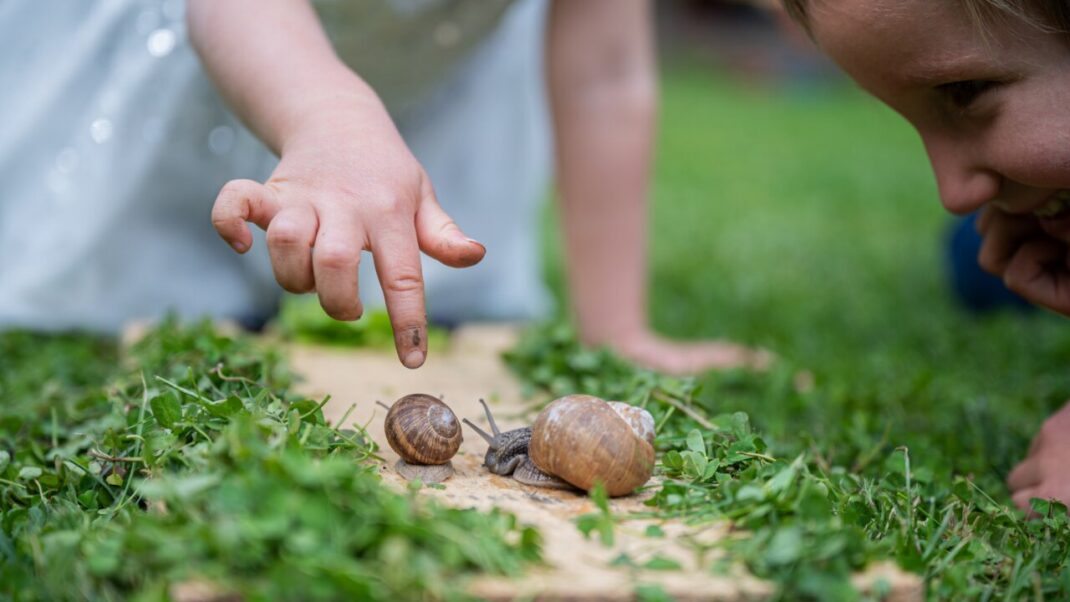
You’ve probably noticed it already — your child crouches down to study a beetle making its way across the sidewalk and doesn’t move for a solid three minutes. Or they fill a bucket with water from the garden hose, pour it slowly over a rock, and watch what happens. Then do it again. Then again, this time with dirt added in.
These moments of deep focus are not random ways to pass a warm afternoon. They represent the exact type of open-ended investigation that sits at the heart of authentic Reggio preschool programs. Summer offers an expansive canvas for children to lead their own discovery, turning simple outdoor interactions into profound, self-directed learning.
The longer days, slower schedules, and unstructured time that come with summer create something genuinely valuable: space for children to follow their questions wherever they lead.
Why Reggio Educators Treat Nature as a Co-Teacher
The Reggio Emilia approach uses a concept called the “third teacher” to describe how environments shape learning. The first teacher is the family. The second is the educator. The third is the physical space itself — the materials, the arrangement, the textures, the light.
Outdoors, nature plays that role without any setup required. A muddy patch after rain, a fallen branch, a line of ants moving along a garden wall — each one presents a child with something worth wondering about. The role of an educator in Reggio-inspired learning is to notice what catches a child’s attention and create space for them to go deeper, rather than redirecting them toward something more structured.
That’s why summer, with all its natural variation, fits this philosophy so naturally. Seasons change. Insects appear and disappear. Plants grow at different rates. Children who spend time outdoors this summer are encountering a learning environment that genuinely changes every day — which keeps their curiosity alive and working.
Simple Outdoor Invitations That Support Deep Exploration
One of the most practical concepts in Reggio-inspired education is the idea of an “invitation to explore” — a small, thoughtfully arranged provocation that draws a child in and gives them a starting point. As noted in An Everyday Story’s Reggio-inspired activity guide, a good invitation doesn’t have to be elaborate; it just needs to offer something open-ended and interesting enough to prompt a child’s own questions.
Here’s what that looks like practically during summer:
- Set out a shallow tray with water, a few smooth stones, and some leaves. Let your child arrange them, pour over them, or sort them — without a goal attached.
- Place a magnifying glass on the porch railing next to a jar of soil and see what your child examines first.
- Offer paper and watercolors outside near a garden or tree and let the colors and shapes in front of them guide what they create.
None of these require purchasing anything special. The invitation is in the arrangement — small, intentional, and open enough that your child’s curiosity takes over from there.
How Outdoor Exploration Develops Language and Thinking
Something that surprises many families is how much language development happens during outdoor play, especially when an adult slows down and talks through what they’re observing alongside the child.
When your child finds a spider web covered in morning dew and you say, “I wonder what holds those droplets in place — look how the light hits each one differently,” you’re modeling a way of looking at the world. You’re also introducing vocabulary: droplets, holds, differently, light. Children absorb these words in context, attached to something real they just saw with their own eyes.
The American Academy of Pediatrics notes that unstructured outdoor play contributes meaningfully to cognitive development and language acquisition in early childhood — and that the quality of adult interaction during that play shapes how much children get from it.
In a Reggio-inspired approach, the educator documents these moments — writing down what the child said, photographing what they made, noting the questions they asked. Over a summer, you might be surprised by how consistent some of those questions become. That consistency is a window into what your child is genuinely curious about, and it can shape how you set up invitations going forward.
What to Do When You’re Not Sure Where to Start
If outdoor Reggio-inspired learning feels unfamiliar, the easiest entry point is also the simplest one: follow your child’s attention and ask more questions than you answer.
If they pick up a pinecone, resist the urge to explain what it is immediately. Ask what they notice about it. Ask what they think it does. Ask them to find two things that are the same size. These open-ended prompts do more to build critical thinking than correct answers do — and your child will almost always surprise you with the direction they take the conversation.
At Kozy Kids Enrichment Center, this philosophy of co-constructed discovery is woven into our Reggio preschool programs, extending across both indoor and outdoor environments. This season, you can invite that same collaborative spirit into your home by observing, documenting, and staying deeply curious alongside your child as a partner in learning.
Frequently Asked Questions
How is Reggio-inspired outdoor learning different from regular outdoor play?
Both involve children spending time outside, but Reggio-inspired outdoor learning is shaped by an adult’s intentional observation and occasional provocation. Rather than just providing open time outside, a Reggio-inspired approach involves noticing what captures your child’s attention, asking questions that extend their thinking, and sometimes setting up a simple invitation that gives them a meaningful starting point for exploration.
Do I need special materials to support Reggio learning at home this summer?
You don’t. Reggio-inspired learning is built around natural, everyday materials — rocks, water, soil, leaves, sticks, light. The goal is open-ended exploration, so highly structured toys or kits tend to work against the approach rather than support it. Simple, real materials from your yard or a nearby park are exactly what this kind of learning calls for.
What age does this work best for?
Reggio-inspired exploration outdoors works across a wide range of ages, including toddlers, preschoolers, and children in early elementary. The questions you ask and the complexity of the invitations you offer will naturally shift as your child grows, but the core approach — following their curiosity, asking open-ended questions, and giving them time to investigate — stays consistent.
What if my child wants to move on quickly instead of staying with one thing?
Some children spend twenty minutes on a single anthill and some spend thirty seconds before moving to the next thing — both are normal. In Reggio-inspired learning, the educator follows the child’s lead rather than requiring sustained attention on one object. Over time, rich environments and patient adult engagement tend to naturally extend the length of a child’s focus without forcing it.
Summer brings something genuinely useful for curious children: slower mornings, time to look closely, and a world that changes a little every day. Bringing a few Reggio-inspired habits into your outdoor time this season is a small shift that tends to make a real difference in how your child engages with the world around them.
Visit us!
We’d love to show you what this approach looks like inside our classrooms — and to hear about the questions your child has been asking lately. Schedule a tour at Kozy Kids Enrichment Center in Portland, OR and come see our learning environment for yourself
Related Posts
All Posts
A Community of Curiosity: Questions Families Can Ask at Kozy Kids

Gentle Separation Strategies That Support Trust, Routine, and Emotional Safety