Gentle Separation Strategies That Support Trust, Routine, and Emotional Safety
Quick Answer
Drop-off transitions represent foundational social-emotional milestones in early childhood education. In Reggio Preschool Programs, educators approach these moments with quiet observation and deep respect for every child as a capable thinker. Rather than rushing goodbyes, teachers co-construct reassuring routines that turn arrivals into opportunities for collaborative discovery. If you are exploring a Reggio Preschool in Portland, OR, understanding this approach reveals how classrooms honor your child’s emotional journey.
When Drop-Off Feels Hard for Everyone
Most parents know that moment. A perfectly normal morning, a walk to the classroom door, and then — your child’s face shifts the moment they realize you are about to leave. Maybe they reached for you. Maybe they went quiet in a way that stayed with you the rest of the day.
That moment is real, and it happens in even the warmest, most welcoming classrooms. Separation is not a sign that something is wrong with your child or your relationship. It is a sign that your child is securely attached — that they know you matter, and that leaving you is something significant.
What makes the difference is not getting through that moment faster. It is building the kind of trust and routine that makes the moment smaller, week by week.
What Reggio-Inspired Educators Understand About This Stage
In Reggio Preschool Programs, children are recognized as competent, capable, and emotionally intelligent thinkers who communicate through many “languages”. Educators do not treat drop-off as an obstacle to manage, but as a relationship to co-construct alongside families. Teachers observe each child’s unique cues: who seeks a light-filled corner to settle or who needs a gentle greeting before stepping into inquiry.
Educators in these classrooms do not treat separation as a problem to be managed. They treat it as a relationship to be built. The adults in the room get to know each child’s patterns — who needs a quiet corner to settle in, who wants to be immediately handed something to do, who needs to see the same familiar face at the same spot every single morning before they feel ready to explore.
That kind of individual knowing takes time, and it takes observation. Writing in NAEYC’s Emergent Curriculum in Relationship-Driven Learning Environments, Susan Stacey describes emergent curriculum as a practice rooted in close listening — following children’s cues, their interests, and the ways they communicate through action long before they find the words. That listening is especially important during transitions, when children often communicate everything through their bodies rather than their words.
How Routine Becomes a Source of Comfort
Predictability is one of the most powerful tools an educator has during drop-off. When a child knows what comes next — the same greeting, the same spot on the rug, the same familiar materials waiting — they can start to relax into the pattern even before their feelings catch up.
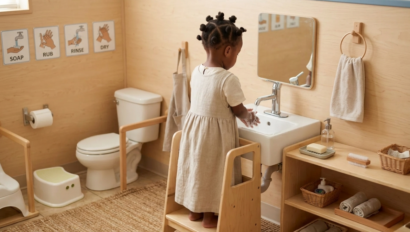
In a Reggio Preschool, the environment acts as the “third teacher”. Thoughtfully curated spaces feature soft natural lighting, open-ended materials, and inviting setups arranged at child height. A child who steps into the classroom and sees a glowing light table, natural clay, or curated loose parts finds an immediate sensory anchor, transforming arrival into an invitation to discover.
Some of that same predictability can be built at home. A consistent morning routine, a specific goodbye phrase used every day, a moment at the door where you look your child in the eye and say clearly that you will be back — these small rituals do real work. Children are not reassured by long explanations. They are reassured by patterns they can count on.
The Role of the Goodbye Itself
One of the most common pieces of advice families hear is to avoid lingering. It sounds counterintuitive, but it holds up. When goodbyes stretch out — with one more hug, one more reassurance, one more look back — children often read that as a signal that the situation requires more anxiety, not less.
A warm, clear, confident goodbye tells your child something important: that you trust this place, and that you trust them to be okay here. Children pick up on hesitation just as quickly as they pick up on calm.
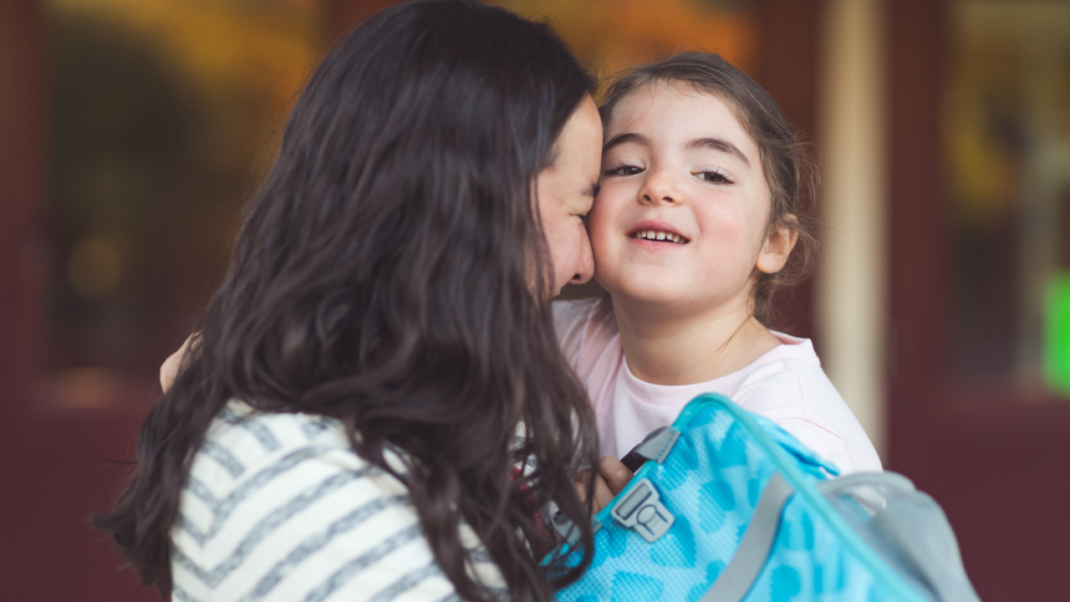
That does not mean goodbye should feel rushed or cold. A goodbye ritual — something short, specific, and yours — can hold a lot of comfort in a very small moment. A special handshake, a phrase you only say at school drop-off, a kiss on the hand. Something that belongs to the two of you and signals that love is not interrupted by the school day.
Educators in a Reggio-inspired program will support whatever goodbye ritual your family develops. They also know how to step in gently once you leave — offering a quiet presence, a hand to hold, or simply staying nearby without pressure while your child finds their footing.
When It Takes Longer Than You Expected
Some children settle quickly. Others take several weeks, and a few take longer than that. Both are developmentally normal, and neither tells you anything certain about how your child will feel about school in the long run.
What matters most during this period is consistency — from you, and from the educators who greet your child each day. Reggio-inspired classrooms support this through careful documentation. Educators observe and record how each child is moving through the adjustment, noticing small shifts in body language, play engagement, and willingness to explore. Those observations become part of an ongoing picture that helps the team respond to each child as an individual.
If something feels like it is not progressing, a Reggio educator will bring you into the conversation — not with a clinical report, but with specific observations and genuine curiosity about what you are noticing at home too. That collaboration between families and educators is central to how Reggio-inspired programs work, and it is especially valuable during the early weeks of enrollment.
Frequently Asked Questions
How long does separation anxiety typically last at drop-off?
Most children move through the adjustment period within two to four weeks, though every child sets their own timeline. Staying consistent with your goodbye routine and keeping communication open with your child’s educators is the most reliable way to support the process. If your child’s distress seems intense or is not shifting after several weeks, it is always worth a conversation with the teaching team.
Should I stay longer at drop-off to help my child feel more settled?
Extended lingering tends to prolong the transition rather than shorten it. A warm, predictable goodbye — brief and consistent — usually helps children settle faster than a longer one. That said, some programs offer a brief settling-in period for new families, where a caregiver sits nearby while the child begins to explore. Ask your child’s educators what they recommend based on what they are observing.
What can I do at home to make mornings easier?
A consistent morning routine makes a meaningful difference. When children know the order of events — breakfast, getting dressed, loading the bag, the drive to school — they can prepare emotionally for the transition rather than being surprised by it. A specific, repeated goodbye phrase also helps. Familiarity is reassuring long before children can articulate why.
How does a Reggio-inspired classroom handle a child who is still upset after I leave?
Educators will stay close without pressure — offering a calm presence, a familiar activity, or a quiet corner depending on what the child seems to need. They will observe carefully and document what they notice, and they will typically reach out to you if your child does not settle after a reasonable amount of time. That communication is part of the relationship, not an exception to it.
What Goodbyes Teach Your Child
The early weeks of school are genuinely tender — for children and for families. What your child is learning during those drop-offs is something that will serve them for years: that goodbyes are temporary, that the adults in their life can be trusted, and that new places can become familiar and safe. That learning does not happen all at once, but it does happen.
We would love to show you how Kozy Kids Enrichment Center supports families through this transition. Schedule a tour and see the environment, meet the educators, and ask every question you have; we would love to meet your family.
Related Posts
All Posts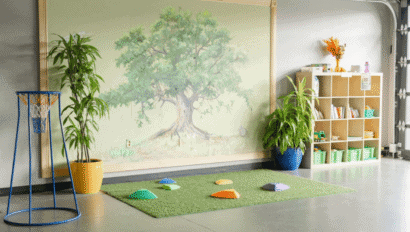
A Community of Curiosity: Questions Families Can Ask at Kozy Kids
Nature as the Third Teacher: A Reggio-Inspired Summer Guide for Portland Families